Why Agricultural Properties Make More Sense Than NA Properties
For many second-home buyers, an NA plot may appear to be the more convenient choice. It is ready for residential development, usually comes with planned infrastructure and is often part of an amenity-led community. But for buyers seeking more land, greater privacy, a nature-led lifestyle and stronger long-term value, a well-chosen agricultural property can make considerably more sense.
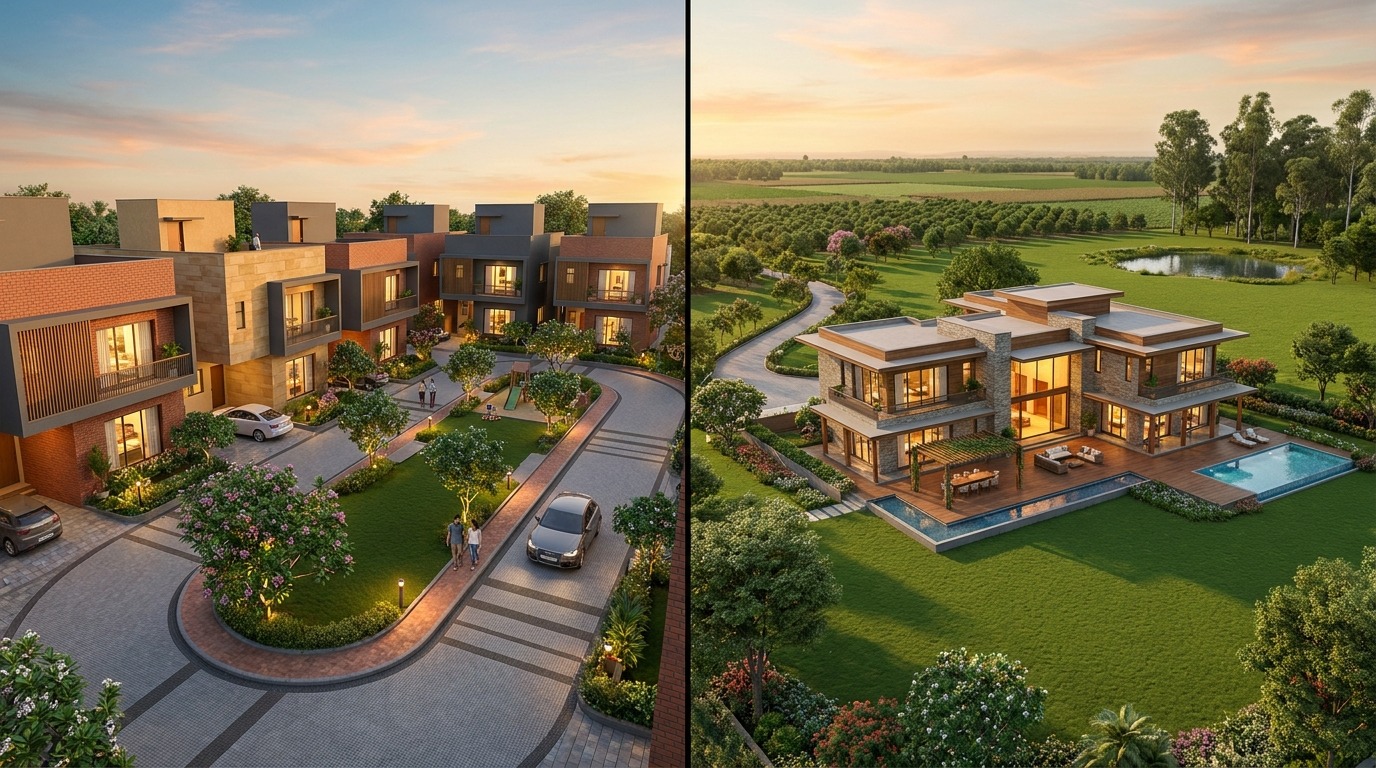
More land for the same investment NA land in Karjat generally commands a significant premium because the cost of conversion, infrastructure, approvals, development and marketing is built into its selling price. As a result, buyers often acquire a relatively small plot—even within a substantial budget.
Agricultural properties can offer considerably more land within the same price band. Instead of owning a few thousand square feet in a dense development, buyers may be able to own an acre or more, creating a very different sense of space, freedom and possibility.
Land that lets you explore more possibilities Agricultural land offers the opportunity to engage with the property more meaningfully. Subject to applicable regulations, soil conditions and local permissions, owners can cultivate an organic farm, create an orchard, grow native trees, develop a food forest or simply allow the land to become greener and more biodiverse over time.
Unlike a conventional second home, where the lifestyle is largely designed by the developer, an agricultural property allows owners to develop a personal relationship with the land. The landscape can evolve gradually, reflecting their interests, values and imagination.
Better potential for long-term appreciation In a developed NA project, much of the value has often already been created—and priced in—by the developer. Buyers pay for land conversion, infrastructure, amenities, construction and the developer’s margin at the time of purchase. This can reduce the headroom available for future appreciation.
Well-located agricultural land can follow a different value trajectory. As connectivity improves, surrounding areas develop and the availability of large land parcels decreases, thoughtfully selected agricultural properties may offer greater potential for long-term appreciation.
At Forest by the Hills, Phase 1 buyers have seen their investments appreciate approximately threefold. This performance has been supported not merely by the underlying land, but by the value created around it—a pristine forest environment, low-density planning and a distinctive community.
Returns, however, are never automatic. Location, title clarity, access, infrastructure, surrounding development and the credibility of the project remain critical. Past appreciation is evidence of historical performance and should not be viewed as a guarantee of future returns.
Greater privacy and lower-density living Many NA second-home projects promise an escape from the city but recreate its density in another form. Large numbers of villas, closely placed plots, internal traffic and busy common amenities can gradually dilute the privacy that buyers originally sought.
Agricultural properties make a fundamentally different lifestyle possible. Larger plots, fewer neighbours and more natural buffers can provide genuine space and seclusion. Instead of overlooking another villa, owners can wake up to trees, streams, hills and open skies.
For people seeking a quieter and more private life in nature, low density may ultimately matter more than a long list of shared amenities.
The community adds value to the land The long-term value of a destination is shaped not only by its location, but also by the environment and community that grow around it.
Forest by the Hills has attracted a discerning, green-hearted community comprising CEOs, managing directors, business owners and accomplished professionals. They are united not simply by the desire to own land, but by a shared belief in conservation, privacy and living more gently with nature.
This combination of a pristine forest setting, responsible stewardship and a high-quality community creates a powerful value ecosystem around every acre. It protects the character of the destination, strengthens its desirability and enhances the long-term investment potential of land at Forest by the Hills.
Forest by the Hills: more land, more privacy, more value
Forest by the Hills was created around a simple idea: true luxury is not measured by the size of a clubhouse, but by the amount of nature and privacy surrounding you.
Located in Karjat, Forest by the Hills is a low-density, conservation-led community of expansive agricultural land parcels. Its landscape includes hills, streams, waterfalls, native trees and rich birdlife—offering owners the freedom to create farms, orchards, forest homes and personal retreats in nature, subject to applicable laws and permissions.
The project brings together four qualities rarely found in conventional NA developments: expansive private land, an immersive natural lifestyle, a like-minded community and a strong record of value appreciation.
For buyers comparing agricultural land with NA plots in Karjat, the choice is ultimately about what they value more. If the priority is a compact, ready-made home with shared amenities, an NA development may be appropriate. But if the aspiration is to own more land, enjoy greater privacy, participate in nature and build long-term value, agricultural property may offer the more rewarding proposition.
At Forest by the Hills, you don’t merely buy a second home.
You own the land, shape the experience and become a keeper of the forest.