98 Reasons the Forest Is Alive
A forest often announces itself before it reveals itself.
In the call of a Malabar Whistling-Thrush near a stream. The flash of a minivet moving through the canopy. The cry of an eagle circling overhead. Or the sudden, brilliant green of a Malabar Parakeet disappearing among the trees.
A recent birding survey at Forest by the Hills recorded 98 species of birds across its 300-acre landscape. More than an impressive number, the findings offer encouraging evidence that this evolving forest is supporting a rich and complex ecosystem.
A landscape of many habitats
Located near Karjat at the foothills of the Sahyadris, Forest by the Hills lies within the Northern Western Ghats—one of the world’s most significant biodiversity regions.
The survey covered trails across all four phases of FBH over three field visits in September 2025. Thirty-four birding checklists were compiled using eBird, with observations made across moist deciduous forest, secondary forest patches and open-country habitats.
This variety of landscapes is one reason FBH supports such a wide range of birds. Dense tree cover provides shelter for forest specialists, open areas create feeding grounds for grassland species, while streams, ponds and natural drainage channels attract birds that depend on wet habitats.
Some very special forest residents
Among the survey’s most significant sightings were birds characteristic of—and, in some cases, largely restricted to—the Western Ghats.
The Malabar Whistling-Thrush, known for its remarkably human-like song, is closely associated with shaded forest patches and flowing water. The Malabar Parakeet, with its blue-grey plumage and long tail, is another distinctive Western Ghats species.
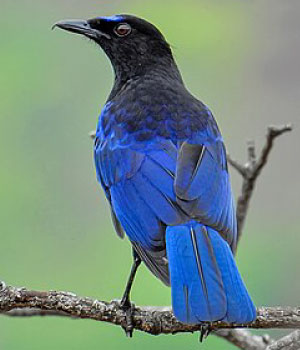
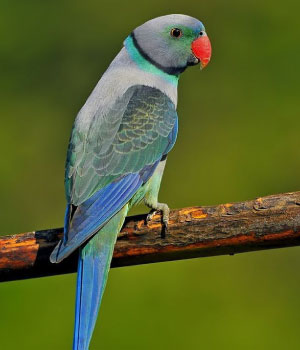
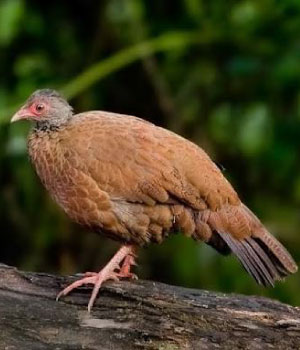
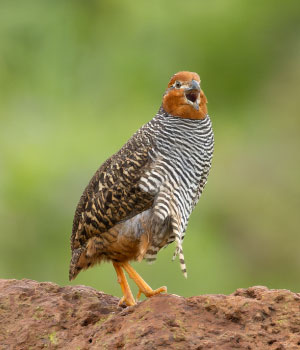
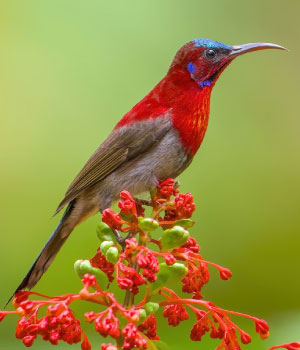
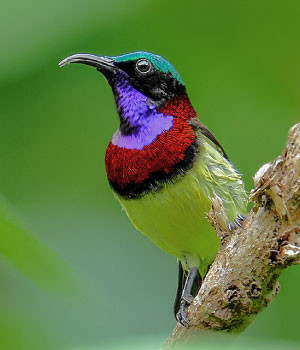
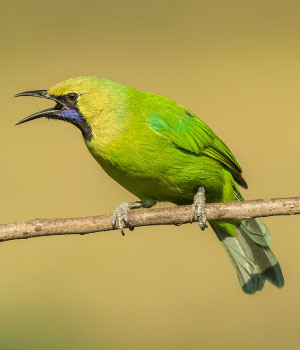
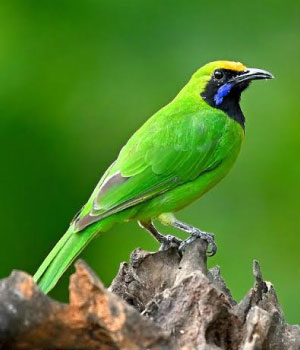
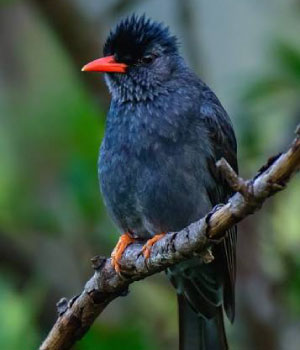
The survey also recorded Red Spurfowl, Jungle Bush-Quail, Vigors’s Sunbird, Crimson-backed Sunbird, Jerdon’s Leafbird, Golden-fronted Leafbird and Square-tailed Bulbul .
Their presence suggests that FBH is not supporting only common urban birds. It is providing the layered tree cover, undergrowth, forest edges, water sources and relatively undisturbed ground habitat needed by more specialised species.
Every bird has a job in the forest
The survey reveals not merely a large number of species, but a healthy diversity of ecological roles.
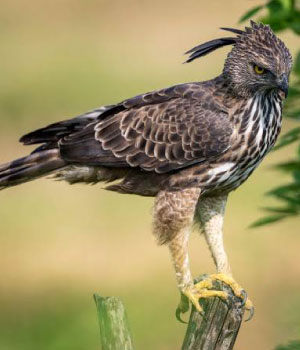
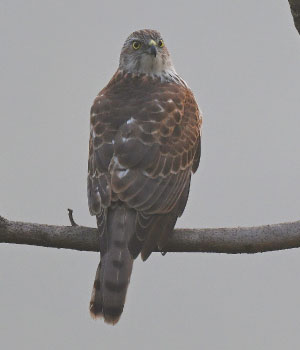
Raptors such as the Changeable Hawk-Eagle, Crested Serpent-Eagle and Shikra occupy the upper levels of the food chain. Their presence can indicate that the landscape contains a sufficient base of prey and a functioning food web.
Woodpeckers, drongos, prinias and warblers help regulate insect populations. Sunbirds, bulbuls, orioles, parakeets and pigeons assist with pollination and seed dispersal. Ground-dwelling birds such as the Red Spurfowl and Jungle Bush-Quail depend on dense undergrowth and an undisturbed forest floor.
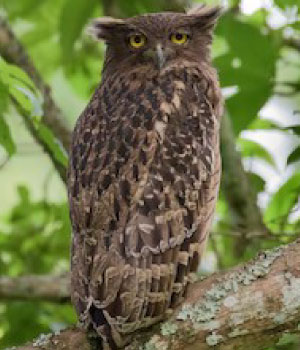
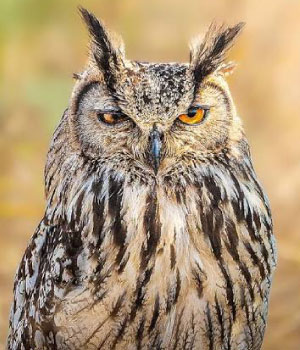
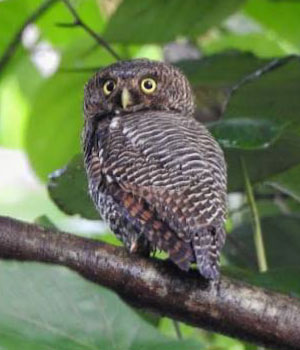
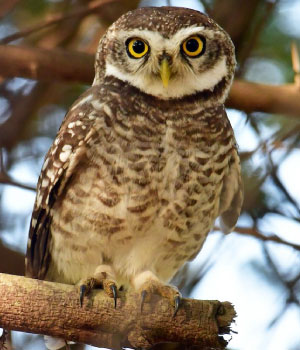
The survey also recorded four owl species: the Brown Fish-Owl, Rock Eagle-Owl, Jungle Owlet and Spotted Owlet. Their presence reinforces the importance of preserving mature trees, water bodies, natural darkness and quieter areas within the landscape.
Together, these birds help the forest protect, regenerate and renew itself.
A refuge—and a stepping stone
Perhaps the most important conclusion of the study is that Forest by the Hills can play a role beyond its own boundaries.
As natural habitats around Karjat become increasingly fragmented, a well-wooded 300-acre landscape can function as a refuge for resident species and as a stepping stone between larger forest patches.
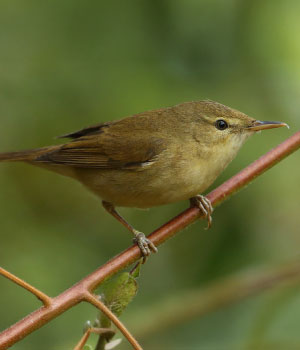
The presence of the winter-visiting Blyth’s Reed Warbler, along with local migrants and monsoon visitors, also suggests that the landscape provides feeding, resting and seasonal habitat for birds moving through the Western Ghats.
FBH is not described in the report as an untouched forest. Its significance lies in demonstrating that a human-inhabited landscape, when managed thoughtfully, can continue to function as meaningful wildlife habitat.
What the birds ask of us
The survey also gives FBH a clear conservation agenda.
Mature native trees and multi-layered vegetation must be protected. Natural banks around streams and ponds should remain free from hard concrete edges and chemical contamination. Dead trees should be retained where they do not present a safety hazard, because they provide nesting cavities and feeding sites.
Sensitive forest patches need protection from excessive noise, bright night lighting and unrestricted movement by domestic animals. Landscaping should prioritise native trees, shrubs and nectar-bearing plants rather than manicured lawns and invasive ornamental species.
Most importantly, the bird checklist should become part of the community’s everyday experience—through guided bird walks, interpretative signs, citizen-science initiatives and responsible guidelines for building and living within the forest.
When the forest thrives, the birds return
The 98 species recorded at Forest by the Hills are not simply visitors on a checklist. They are pollinators, seed carriers, insect controllers, predators, forest regenerators and indicators of the health of the land.
Their presence tells us that the conservation journey at FBH is working.
Their continued presence will tell us whether we remained true to it.
Because the measure of a forest is not only how many trees it contains.
It is how many lives feel at home among them.